Unlock Your Content Potential: The Best AI Tools for Small Businesses
Nov 8, 2025
1 mins read
Author

What AI-Powered Content Marketing Means for Your Business
AI-powered content marketing uses artificial intelligence to help you create, optimize, and distribute content faster and smarter. Here's what it can do:
Generate content - Write blog posts, social media captions, and product descriptions in minutes instead of hours
Research and analyze - Find trending topics, keywords, and audience insights automatically
Optimize for search - Improve your content's visibility in Google, ChatGPT, and other AI search tools
Personalize at scale - Tailor messages to different audience segments without manual work
Automate workflows - Schedule posts, respond to customers, and manage campaigns with less effort
The numbers are compelling: over 75% of marketers use AI, with nearly 80% reporting positive ROI. A blog post that once took 4 hours can now be drafted in minutes, saving significant time and money.
But here's the challenge most service business owners face: you're busy doing the work, completing projects, serving clients. Every finished job represents expertise worth sharing, yet that knowledge rarely becomes content. Meanwhile, your potential clients are searching for answers in Google AI Overviews and ChatGPT—searches you're missing because you don't have time to create content.
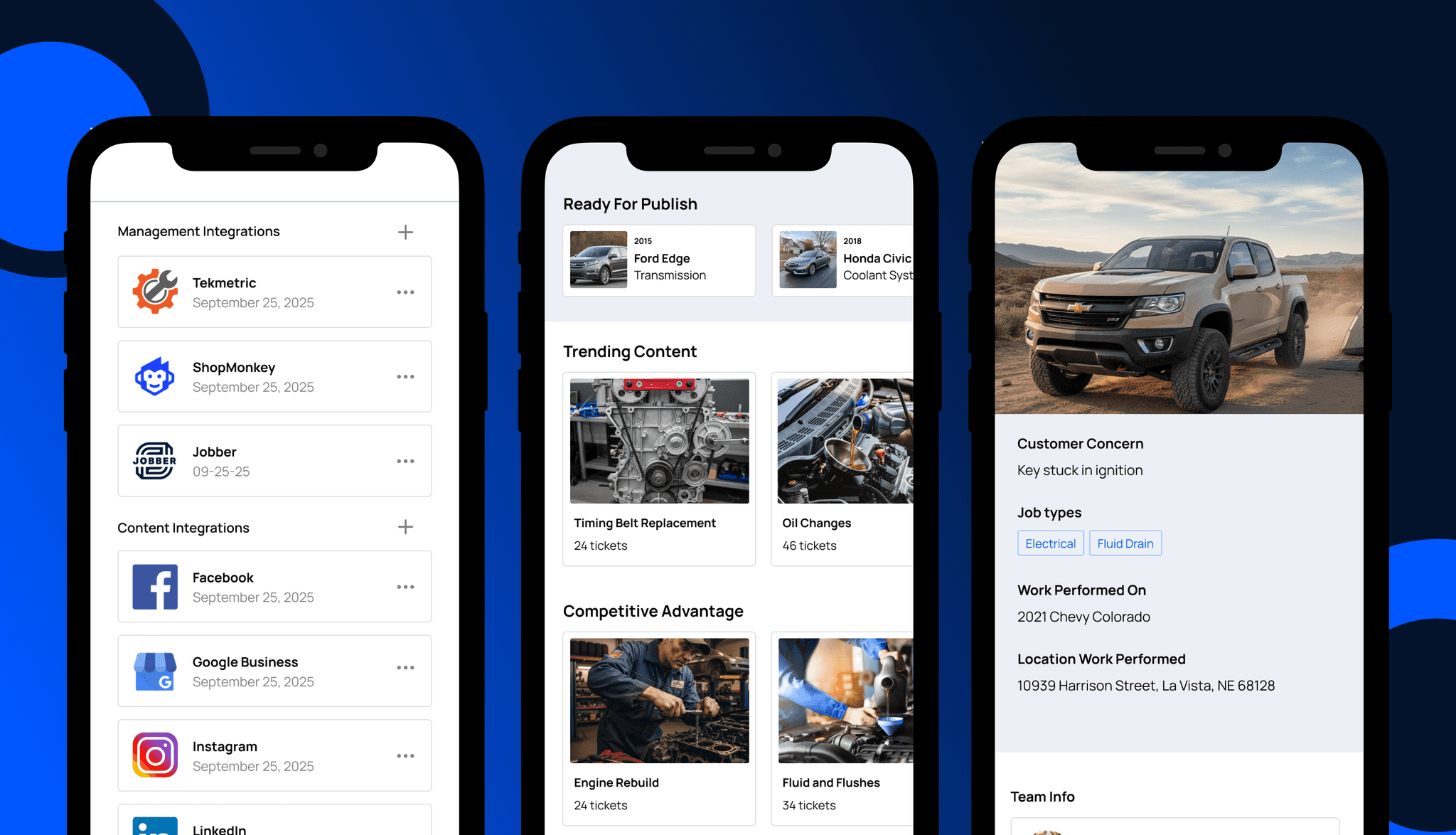
AI changes this equation. It transforms your completed work tickets, client conversations, and day-to-day expertise into content that attracts high-value clients searching for your specific skills.
I'm Joe Toscano, CEO of Service Stories and featured expert in Netflix's "The Social Dilemma." I've spent years helping businesses leverage AI-powered content marketing to turn their expertise into visibility, and I've seen how the right AI tools can level the playing field for small businesses competing against larger competitors. Let me show you how to get started.
Why AI is a Game-Changer for Small Business Content
Running a small business means wearing too many hats. You're the CEO, accountant, and customer service rep—and you're also expected to be a content marketing expert. This is why AI-powered content marketing is a game-changer.
Previously, a single blog post could take hours to research and write. The alternatives were hiring expensive help or not creating content at all, which meant falling behind competitors.
AI flips this script. That same blog post can be drafted in minutes. The productivity boost is staggering, with 74% of marketers reporting significant gains. It's not about replacing your expertise; it's about sharing it faster.
The cost savings are also impressive. AI tools cost a fraction of hiring a freelancer, and nearly 80% of marketers report positive ROI. You're not sacrificing quality; you're using AI for first drafts that you can refine with your expertise.
AI also enables scalability. As your business grows, you can scale content production to match without a proportional increase in cost or time.
SEO performance also improves. AI tools analyze keywords and optimize content structure based on what ranks. While AI-generated content takes a similar 2-3 months to rank, you can publish far more of it in the same period.
Personalization at scale, once impossible for small businesses, is now achievable. AI analyzes customer data to tailor content automatically. As Sim Aulakh from PR firm EstablishCred points out, AI enables personalized stories that genuinely resonate with specific audiences. You can address different customer segments without creating every variation manually.
The market validates this shift. Global revenue for AI in marketing is projected to exceed $107.5 billion by 2028. This isn't a trend—it's a fundamental change in how content marketing works. Small businesses that accept AI-powered content marketing now are positioning themselves to compete effectively against much larger competitors.
The best part? You don't need to become an AI expert overnight. Start small, experiment, and gradually build your confidence. Your expertise remains the secret ingredient—AI just helps you share it with the world more effectively.
For more insights into how businesses are using AI to grow their visibility, check out our blog.
The Essential AI Toolkit: Tools for Every Content Need
The world of AI tools can be overwhelming, but you don't need to master them all. You just need the right toolkit for your specific content needs.
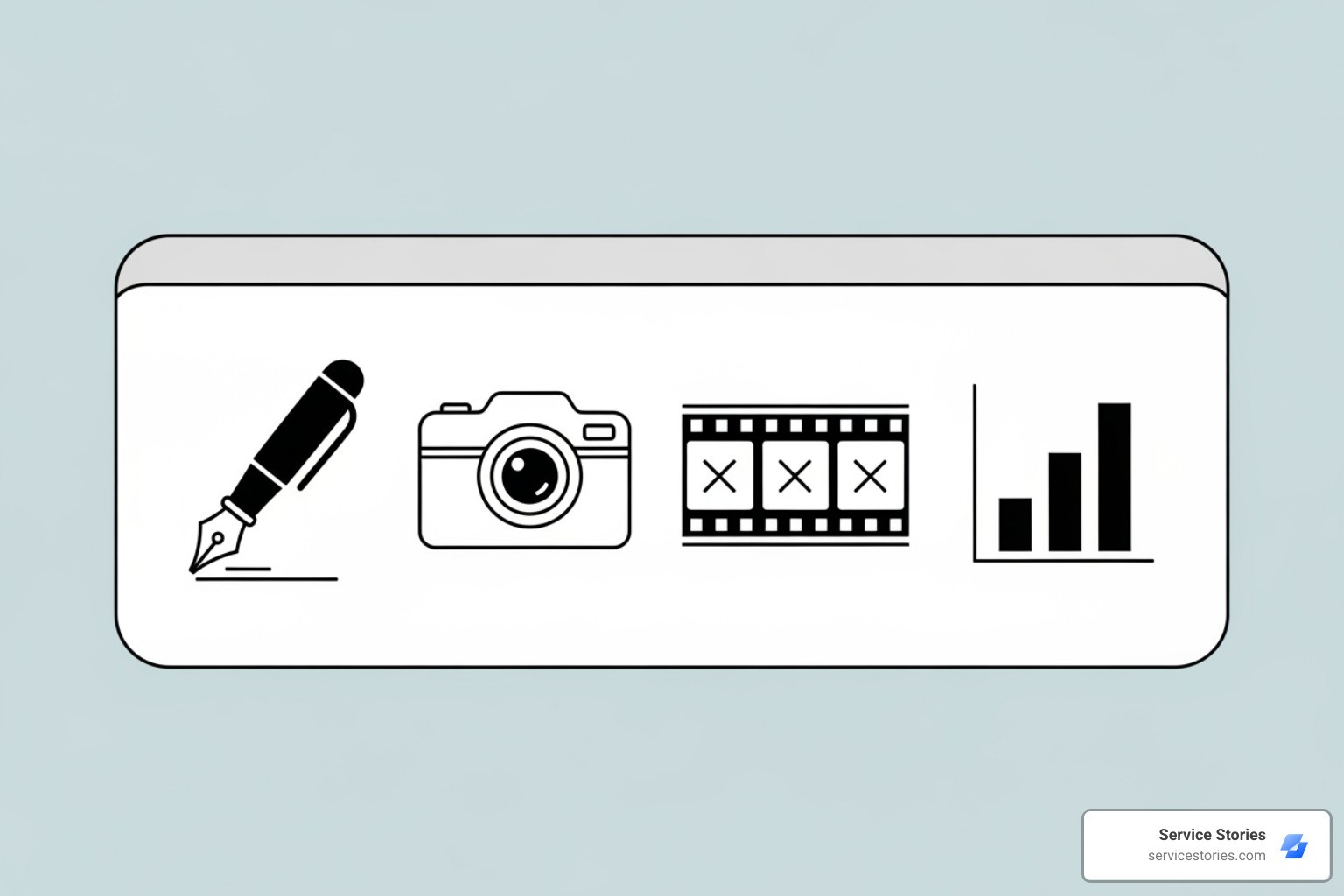
Data shows where businesses focus: over 55% of marketers use AI for content creation and 47% for research. This shows AI excels at creation and strategy.
When choosing tools, prioritize ease of use, integration with your existing systems, and data privacy. With 75% of marketers evaluating AI tools on their privacy policies, protecting your client data is crucial.
AI Writing & Editing Assistants
These are the backbone of AI-powered content marketing, acting as tireless writing partners.
For drafting blog posts, AI writing tools can transform a prompt into a complete article, eliminating the blank page. Provide a topic and key points to get a solid first draft, saving hours of writing time before you add your unique expertise.
AI assistants also excel at creating social media captions. They can generate multiple variations for different platforms in seconds, adjusting the tone for each audience.
For email campaigns, AI helps craft compelling subject lines and body copy. By using established copywriting frameworks, they make promotional emails feel more helpful and less salesy.
Grammar and style checkers are essential editing partners. These tools do more than catch typos; they suggest improvements for clarity, conciseness, and tone. Others focus on readability scores to ensure your content is easy to understand, helping your expertise shine through.
AI Visual & Multimedia Generators
Content today needs more than just words. Your audience expects engaging visuals, videos, and audio.
AI image generation is now highly sophisticated. Text-to-image tools create unique visuals from a simple description, so you no longer need to rely on generic stock photos. It's no surprise that 53% of marketers are already using AI for image generation.
AI makes short-form video creation accessible. Tools can turn blog posts into social media videos or animated explainers without a camera. With 56% of marketers using AI for short-form video, you can reach new audiences without being a videographer.
AI text-to-voice generators create natural-sounding narration for videos at a fraction of the cost of a professional voice actor. The quality is now so high that it's often indistinguishable from a human voice.
AI-powered audio editing tools save hours in post-production by automatically removing background noise and handling other tedious tasks.
AI Strategy & Research Tools
Great content starts with knowing what to create. This is where AI research tools become invaluable.
AI content ideation tools act as brainstorming partners, generating endless topic angles based on your industry and audience to overcome writer's block.
AI keyword research tools replace hours of manual analysis. They reveal what customers are searching for and their search intent, helping you create content that answers real questions and ranks in AI-powered search results.
AI trend spotting tools keep you relevant by analyzing social media and search queries to identify emerging topics, allowing you to create timely content.
AI tools analyze customer data to provide audience insights on preferences and pain points. This helps you create targeted solutions instead of generic advice, which is why 47% of marketers use AI for research.
AI Personalization & Automation Platforms
These tools help you scale personal connection.
Modern AI chatbots understand natural language and provide helpful, 24/7 responses. With 74% of consumers preferring chatbots for quick answers, it's clear why 41% of brands use them for conversational marketing.
Automated response tools for social media and email ensure customers get timely replies. AI can draft personalized answers to common questions, freeing you up for more complex issues.
CRM integration enables seamless data flow between your AI tools and customer platform. This allows for truly personalized marketing based on customer history, ensuring the right message reaches the right person at the right time.
The key to all these tools? They work best when they're working together, creating a system that amplifies your expertise rather than replacing it. You bring the knowledge and the human touch. AI handles the heavy lifting and repetitive tasks.
A Practical Guide to Your First AI-Powered Content Marketing Campaign
Launching your first AI-powered content marketing campaign doesn't have to be complicated. Think of AI as a new team member ready to help. The secret is learning to work with AI to turn your expertise into content that attracts customers.
Service business owners possess a goldmine of knowledge from every completed job. The challenge is finding time to share it. AI changes that.
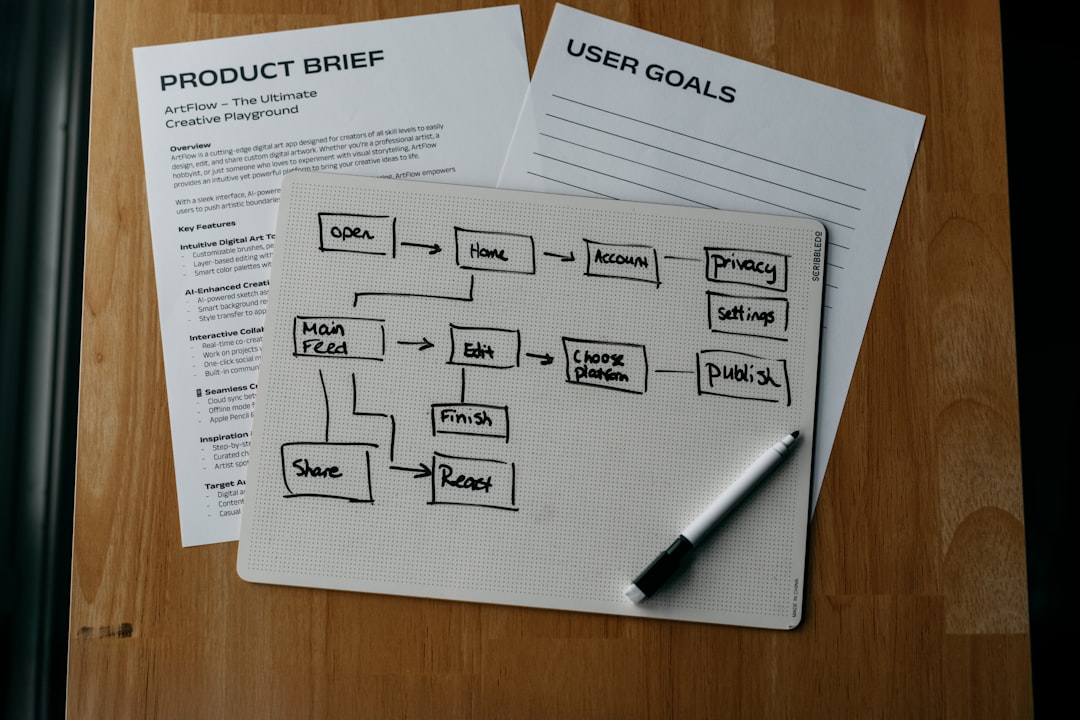
Step 1: Strategy, Research, and Brainstorming
Before writing, you need to know what you're writing about and for whom. This is where AI becomes your research assistant.
First, use AI to understand your audience. Analyze customer data, common questions, and social media patterns. For service businesses, completed work tickets are a treasure trove of insight into customer problems and questions. AI can spot these patterns quickly to help you build detailed customer profiles.
Next, use AI to brainstorm topic clusters around your core services. A main topic like "emergency plumbing repairs" can be surrounded by related sub-topics. This strategy signals your authority to search engines more effectively than random articles.
AI-powered keyword research identifies the exact phrases customers use in search engines. These tools find high-volume, low-competition keywords and analyze competitor rankings to find content gaps. This ensures your content is findable by people who need your services.
For seamless connectivity between your various business tools, explore our integrations.
Step 2: Creating and Optimizing with AI
Now it's time to create content, where AI becomes indispensable.
Use AI writing assistants as first-draft specialists. Based on your research, prompt AI to generate blog posts or case studies. For example, feed it the details from a completed work ticket—the customer's problem, your solution, and the outcome. AI can draft a helpful blog post in minutes, turning your work into valuable content.
These are drafts. Your expertise and voice are needed to make them genuinely helpful—the human touch AI can't replicate.
Then, use AI to optimize for search engines. These tools check for natural keyword use, suggest internal links, and improve readability. They can even compare your content to top-ranking articles and suggest improvements, increasing your chances of appearing in Google AI Overviews.
A great headline can dramatically increase clicks. AI can generate dozens of options in seconds, testing different angles and formats for you to choose from.
Don't forget visuals. AI image generators create custom graphics and illustrations in minutes, ending the search for generic stock photos. Whether you need a diagram, social media graphic, or blog header, AI can create it.
Step 3: Repurposing and Distributing Content
Creating great content is only half the battle. AI helps you work smarter to get it in front of the right people.
Repurpose a single blog post into multiple formats. AI video tools can turn text into short explainer videos for social media or animated summaries for YouTube. This allows you to reach audiences who prefer video without creating new content from scratch.
AI can also extract key points from long-form content and create bite-sized social media posts, adjusting the tone for each platform. This ensures a consistent message custom to each channel's culture.
AI tools can also improve accessibility for your audience and SEO. They suggest formatting improvements like shorter paragraphs and generate alt text for images. Better accessibility leads to a better user experience and improved search rankings.
Finally, let AI handle scheduling. Social media management tools can analyze audience activity to suggest optimal posting times and automate distribution. This ensures consistency, which is crucial for building an audience, and frees you to focus on creating value.
The beauty of AI-powered content marketing is that it takes your real expertise—the work you're already doing every day—and amplifies it. You're not creating content for content's sake. You're sharing genuine knowledge that helps people, builds trust, and positions you as the obvious choice when they need your services.
Navigating the Pitfalls: Challenges and Ethical Use of AI
While AI-powered content marketing has incredible advantages, it's not perfect. It can miss facts and human nuance. As business owners, we must understand these limitations and use AI thoughtfully.

Common Limitations of AI-Powered Content Marketing
The biggest challenge is inaccurate information, or "hallucinations." About 43% of marketers struggle with this. Since AI learns from vast datasets, it can repeat errors, which is dangerous for service businesses where accuracy is critical. Always fact-check AI-generated content.
AI also lacks true creativity. It combines existing ideas but can't produce original thoughts based on lived experience. The resulting content can feel generic and may not capture a reader's attention.
Contextual understanding is another weak spot. AI can miss sarcasm, industry jargon, and other nuances, especially in complex topics.
AI also struggles with cultural nuances, making human oversight critical when targeting diverse or global audiences.
Ethical Considerations and Staying Compliant
Beyond functionality, we have ethical responsibilities when using AI.
Plagiarism is a real risk. AI learns from existing content and can produce outputs that are too similar to other work. Always edit and check AI content for originality to avoid legal issues and protect your reputation.
Data privacy is a major concern, cited by 41% of marketers as a barrier to adoption. Sharing client data with unregulated AI tools is risky. Choose tools that comply with regulations like GDPR and CCPA and have clear privacy policies.
AI can also exhibit bias. Since it learns from historical data, it can perpetuate societal stereotypes. We must actively watch for bias and choose tools trained on diverse datasets.
Finally, raw AI content often fails to meet Google's E-E-A-T guidelines (Experience, Expertise, Authoritativeness, Trustworthiness). It lacks the personal experience and authority that human experts provide. To rank well, you must humanize AI content to showcase your unique expertise and brand voice.
Will AI Replace Human Creators?
Many marketers (32%) fear being replaced by AI, but the future is more nuanced.
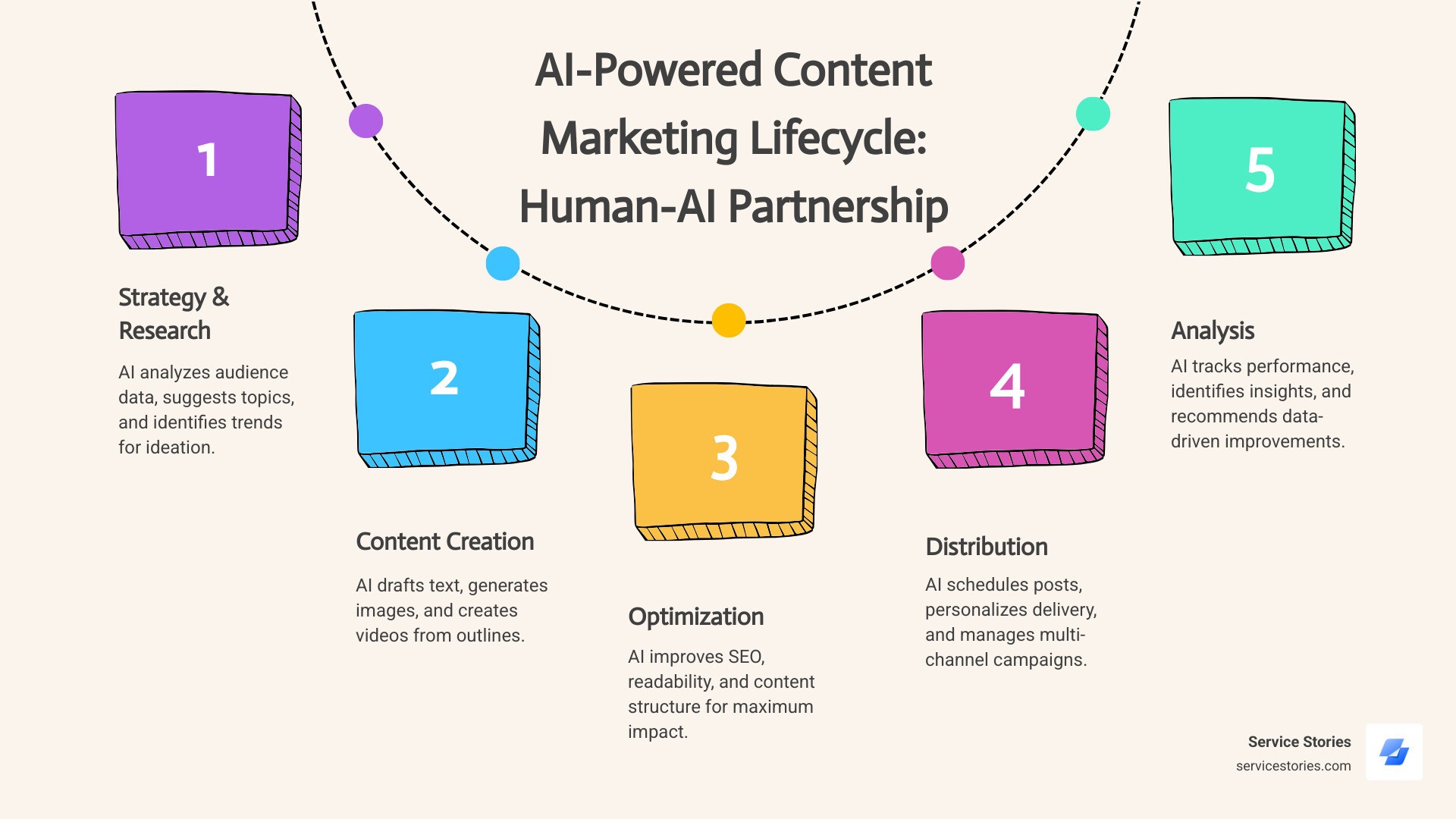
The future is a human-AI partnership. AI is a capable assistant, not a replacement. It handles tedious tasks, making you more productive—a sentiment shared by 74% of marketers.
As an assistant, AI handles repetitive tasks like pulling stats and generating first drafts. As Nima Olumi from Lightyear Strategies notes, AI helps find interesting angles, but it doesn't replace strategic or creative thinking.
Human expertise remains irreplaceable. Your experience, brand voice, and emotional connection cannot be replicated by AI. For service businesses, the real-world expertise from your work is what makes content valuable. AI helps express that expertise, but it can't create it.
The outlook is clear: marketers who collaborate with AI will thrive. It's about adapting your skills to guide AI effectively. The human-in-the-loop model is already here.
Conclusion: The Future is a Human-AI Partnership
We've covered what AI-powered content marketing is, the tools that make it work, and the impressive results marketers are seeing. AI helps research, create, and distribute content at a previously impossible scale.
But here's what matters most: AI isn't about replacing you or your expertise. It's about amplifying it.
Every work ticket you complete is a piece of expertise that could attract your next customer. But this knowledge often stays offline, invisible to potential clients searching for your solutions.
AI-powered content marketing changes that equation. It gives you a practical way to turn your real-world experience into content that shows up in Google AI Overviews and ChatGPT—right where your potential clients are looking for answers. You provide the expertise and authenticity that AI can't replicate. AI handles the heavy lifting of research, drafting, and optimization that you don't have time for.
This human-AI partnership is the future, and it's already here. The service businesses thriving today aren't choosing between human creativity and AI efficiency—they're combining both. They're using AI to work faster while keeping their unique voice, their hard-earned knowledge, and their genuine connection with clients at the center of everything they create.
Your expertise deserves to be seen. Every problem you've solved, every client you've helped, every insight you've gained—that's content waiting to happen. Service Stories is built specifically for this purpose: changing your completed work tickets into compelling, AI-optimized content that showcases what you actually do, not just what you say you can do.
The businesses winning online aren't necessarily the ones with the biggest marketing budgets. They're the ones who consistently share their real-world expertise in ways that AI search tools can find and recommend. That could be you.
Ready to turn your daily work into content that attracts high-converting customers? Showcase your expertise with AI-powered content and see what's possible when you combine your knowledge with the right tools.